Celebrating our Community
In January 2025, we introduced a new segment to our alumni newsletter, Alumni Spotlight, where each month we chose a notable member of our amazing and diverse alumni community to showcase. The idea was to create a space where we could capture the brilliance of alumni from all throughout our history, from ground-breaking mathematicians to award-winning comedians and everyone in-between. Here, we will archive all of these spotlighted alumni so that they my remain a source of inspiration for our community.
Dame Mary Cartwright
Mathematics, 1919
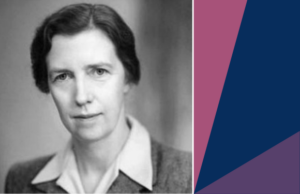
Mary Cartwright was an influential mathematician, renowned for her work as an early pioneer of chaos theory. She was a lifelong ground breaker being the first woman to obtain a first, to serve on the Council of the Royal Society, and to receive the De Morgan Medal, the highest award of the London Mathematical Society. She was Mistress of Girton College, Cambridge, and was honoured by the queen in 1969.
Rebecca Front
English, 1982

BAFTA award winning entertainer, alumna and Honorary Fellow Rebecca Front is a prolific and critically acclaimed television actor, comedian, and writer, having written or starred in over 100 productions, won two awards and been nominated for a further three. Her most well-known roles include Nicola Murray in The Thick of It, Chief Superintendent Jean Innocent in Lewis, and cast member of The Day Today. She has released two autobiographical books, Curious and Impossible Things Before Breakfast, and hosts the podcast Three People with Rebecca Front. Photo Credit: Rachell Smith
Sarah Outen MBE
Biological Sciences, 2004
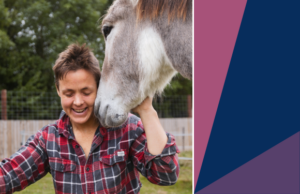
A pioneering adventurer, alumna and Honorary Fellow Sarah Outen MBE is a multi-record breaking athlete, motivational speaker, and Honorary Fellow of St Hugh’s College. From learning to row on the Isis, Sarah went on to row solo across all of the world’s major oceans. Her London2London: via the World expedition saw her kayak, cycle and row round the world. Her expeditions raised over £80,000 for charities and inspired thousands of children through schools’ engagement. Sarah now works therapeutically with children and adults, often alongside her herd of donkeys.
Lucille Iremonger
English, 1934
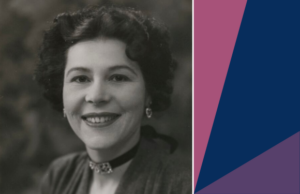
Lucille Iremonger (born June 1915, Kingston, Jamaica) was a writer and politician who won a scholarship to read English at St Hugh’s in 1934. She led a successful writing career, which included publications such as The Ghosts of Versailles (1956) debunking St Hugh’s College’s very own Moberly–Jourdain incident. Her most successful work was The Fiery Chariot (1970), addressing the many British prime ministers who were illegitimate or orphaned as children. Following in the footsteps of husband, Tom Iremonger, MP for Ilford North, she represented Norwood as a member of London County Council from 1961 until its abolishment in 1965.
Freda Levson
Geography, 1930
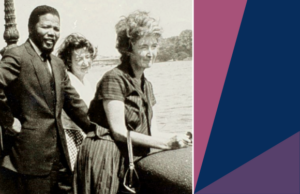
Winifred “Freda” Levson (nee Troup, Geography, 1930): South African apartheid activist. Her journey to lifelong activism started during WWII, when volunteering on a ship that transported evacuees. She worked with Reverend Michael Scott against racial segregation in southern Africa and later published a book on Scott’s work which helped bring public attention to the issue. In South Africa, she campaigned against unjust laws (for which she spent time in prison), to raise funds to cover legal fees for those accused during the 1956 Treason Trial, and for a boycott of racially segregated theatres. Upon her 90th birthday, Nelson Mandela sent her a telegram thanking her for her work. Photo credit: South African History Online
Professor Freda Stevenson
Biochemistry, 1961
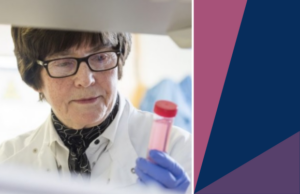
A leading authority in immunology, Professor Freda Stevenson has changed the way we view immunotherapy to treat cancer. Freda helped to show that antibodies can be used to treat cancer cells, created a vaccine that uses DNA to increase immunity to cancers, and found a way to use genes to better understand the subsets of leukaemia and discern which is likely to progress. Her life-saving work has been recognised by multiple medals and awards, as well as a Fellowship at the Academy of Medical Sciences.
Dame Helen Ghosh DCB
Modern History, 1973
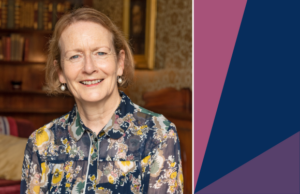
Pioneering civil servant, alumna and Honorary Fellow Dame Helen Ghosh served as Director General of the National Trust from 2012, following a varied and distinguished career in the Civil Service. While a civil servant, she was the first woman and, until very recently, only woman to serve as Permanent Secretary of one of the three “great Departments of State” (Treasury, Foreign Office, Home Office). She was honoured for her work in Civil Service with a DCB in 2008 and became Balliol College’s first female Master in 2018.
Doreen Warriner OBE
Philosophy, Politics & Economics, 1922
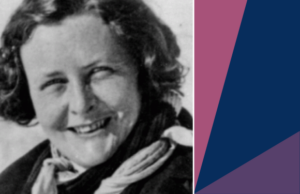
This month, we’re celebrating the heroic life of Doreen Warriner OBE (Philosophy, Politics & Economics, 1922), passionate and indefatigable humanitarian, feminist and economist. In 1938, Warriner travelled to Prague where masses of refugees had accumulated fleeing Nazi oppression. With the threat of invasion higher than ever, Warriner worked tirelessly to help Jews and other groups vulnerable to Nazi persecution find sanctuary in Britain. As the representative of the British Committee for Refugees from Czechoslovakia, she sought to improve the slow response of the British authorities to the refugee crisis in Czechia. Warriner helped to relocate an estimated 15,000 refugees, only leaving when the threat of Nazis seeking her arrest became too high. She was awarded an OBE in 1941, continued humanitarian aid work and scholarship for the rest of her career, and was named a British Hero of the Holocaust posthumously.
Lady Kofoworola Ademola
English, 1932
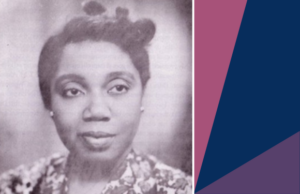
In October 2025, we observed Black History Month by profiling the alumna who began St Hugh’s Black history, Lady Kofoworola Ademola. Lady Ademola’s legacy is secured at the College in a project named in her honour. Kofoworola Ademola (née Moore) arrived at St Hugh’s College in 1932 to study English and in 1935 became the first Black African woman to achieve a degree at Oxford. Lady Ademola was a lifelong advocate for women’s education and social reform. Her achievements included becoming the first president of the National Council of Women’s Societies in Nigeria, the first female member and later chairperson of the Board of Trustees of the United Bank for Africa, and a member of the Nigerian Scholarship Board.
Sybil Thompson
Social Anthropology, 2003
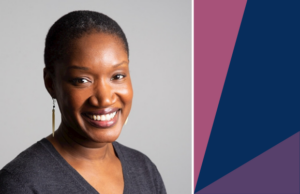
Sybil Thomson has dedicated her life to the protection of human rights. After first volunteering with Canadian Red Cross Society. In law school, Sybil volunteered with a legal services NGO in Egypt, working in a team to provide comprehensive care for asylum-seekers. After graduating, she interned at the UN’s Office of the High Commissioner for Human Rights, to strengthen national human rights institutions. She also coordinated the pro bono program during her time working as a lawyer with Canada’s federal Department of Justice in Toronto. Today, as a Cabinet-appointed decision-maker with the Immigration and Refugee Board of Canada, Sybil works to advance the Board’s mandate to protect those at risk of persecution while maintaining the integrity of Canada’s immigration and refugee protection system.
Gianetta Corely
Modern Languages, 1958
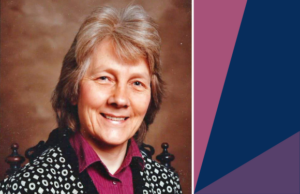
In a special edition of Alumni Spotlight, we had alumna and Distinguished Friend of St Hugh’s College, Dr Gianetta Corely recount her life in her own words:
An Oxford qualified teacher, Gianetta was committed to working in the national Education Service. Through additional trainings she filled several countrywide roles within it, followed much later, by three overseas advisory ones. Her authorised empirical educational research was achieved with the keen participation of young vision impaired children, and their teachers, and her co-authored academic articles, have travelled digitally and globally. Many friendships arose from projects with educationalists in Antigua, Romania and Tanzania, the last of these receiving a personal acknowledgement from the royal Patron.
Madge Adam
Physics, 1931
Solar astronomer Madge Adam was internationally known for her ground-breaking research on the nature of sunspots and their magnetic fields. She was the only woman undergraduate in her year at Oxford reading Physics, and the first woman to achieve First Class Honours in the subject in 1934. She went on to become the first postgraduate student in Solar Physics at the University of Oxford Observatory and the first woman to be elected a member of Council of the Royal Astronomical Society in 1944.
Eileen Challans (Mary Renault)
English, 1925
Mary wrote under the pen name “Mary Renault” to shield herself from the risks of writing about gay relationships at a time when homosexuality was illegal. After St Hugh’s, Mary worked as a nurse in Oxford and began publishing her novels. A prize from MGM enabled her to write full time and emigrate with her partner Julie Mullard to South Africa where she could find some LGBT+ community and write with less fear of English censorship. Here, she was also an anti-apartheid activist and president of the South African chapter of PEN International. Her books gained not just a gay following, but also positive popular and critical reception, frequently blending elements of historical fiction and classical figures with refreshingly positive depictions of gay characters and relationships. Funded by the royalties from Mary Renault’s novels, St Hugh’s offers the Mary Renault prize, a Classical Reception essay prize for sixth form pupils.
Nancy Sandars
Archaeology, 1950
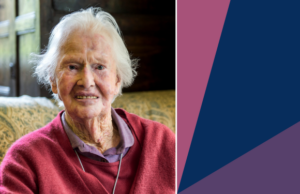
After surviving tuberculosis as a child, Nancy travelled extensively across Europe and began working as an archaeologist with Dame Kathleen Kenyon before the outbreak of World War II. During the war, she served first as a nurse, then as a motorcycle dispatch rider having to navigate during blackouts, and finally was assigned to the Y service of the Government Code and Cypher School at Bletchley Park. After the war, she gained her formal education, researching with St Hugh’s who supporter her archaeological endeavours later in her career. She toured Europe for her research and produced a greatly successful prose rendition of the Epic of Gilgamesh (Penguin, 1960). Her scholarship earned her Fellowship to the Society of Antiquaries and the British Academy.
Carolyn Price
Classics, 1982
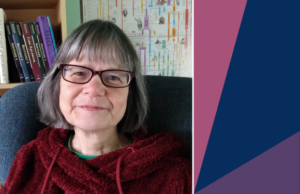
Carolyn Price is known for her research in Philosophy of Mind. In 1986, she graduated with First Class Honours in Literae Humaniores, then stayed at Oxford to pursue postgraduate study in Philosophy. She held a College Fellowship at St Hugh’s, before moving to the Open University, where she helped design and run several innovative distance-learning courses in Philosophy and the Humanities. Her research explores the nature and value of emotions, including love, grief and regret. She retired in 2019.
Matthew Gubb
Social Science, 1992

A passionate climate scientist, Dr Matthew Gubb came up to St Hugh’s from his native New Zealand in 1992, after which he began work for the United Nations Environment Programme. He worked as Senior Advisor to the Chemicals Branch, working on chemical risk reduction and waste issues, and advised on the Global Environment Facility in a similar vein, focussing on pesticides and mercury. In 2013, the year before his untimely passing, Matthew’s work culminated in the Minamata Convention on Mercury, a global agreement on environment and health which today has 153 participating parties worldwide.
Joanna Trollope CBE
English, 1962
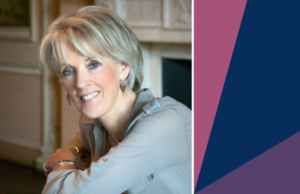
In 1962, a scholarship allowed a young Joanna Trollope to come to St Hugh’s from a state school, to read English. After graduation, Joanna worked for the Foreign Office and taught English, before becoming a full-time novelist. She transitioned from historical fiction, to romance, to contemporary fiction, winning awards and rarely out of the bestsellers list following her first bestseller, The Rector’s Wife. Several novels such as The Choir and Marrying the Mistress were adapted for TV and stage. She also published non-fiction Britannia’s Daughters and contributed to a modern adaptation of Jane Austen’s Sense & Sensibility. She was appointed OBE in 1996 and CBE in 2019.
Freda Bedi
Philosophy, Politics & Economics, 1929
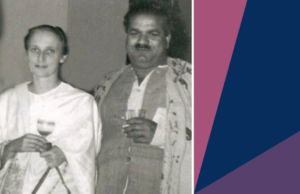
A week after their Final exams, Freda Bedi (née Houlston) married Sikh Oxford contemporary Baba Bedi and moved to Lahore (now Pakistan) where they published, spoke and taught in support of Indian independence and women’s issues. She protested with Mahatma Gandhi; potentially the only European woman to do so. The Bedis fled growing violence in Lahore to Delhi, where Freda worked with the UN developing Burma (now Myanmar) and India’s social services and discovered Vipassana meditation. She worked tirelessly in support of Tibetan refugees and spiritual leaders, exemplified by her founding of the Young Lamas’ High School. In 1972, Freda became the first European woman to become fully ordained in the Kagyu tradition of Tibetan Buddhism and was later honoured by the Indian government for her work. You can click here to read more about her life in this compelling and meticulously researched article, “Freda Bedi: A Woman of Multiple Lives, All Well-Lived”.
