23 October 2026
The Lady Ademola Lecture
This year's Lady Ademola Lecture was delivered online by Professor Anthony G. Reddie who gave an inspiring talk entitled "We are here because you were...
Read More
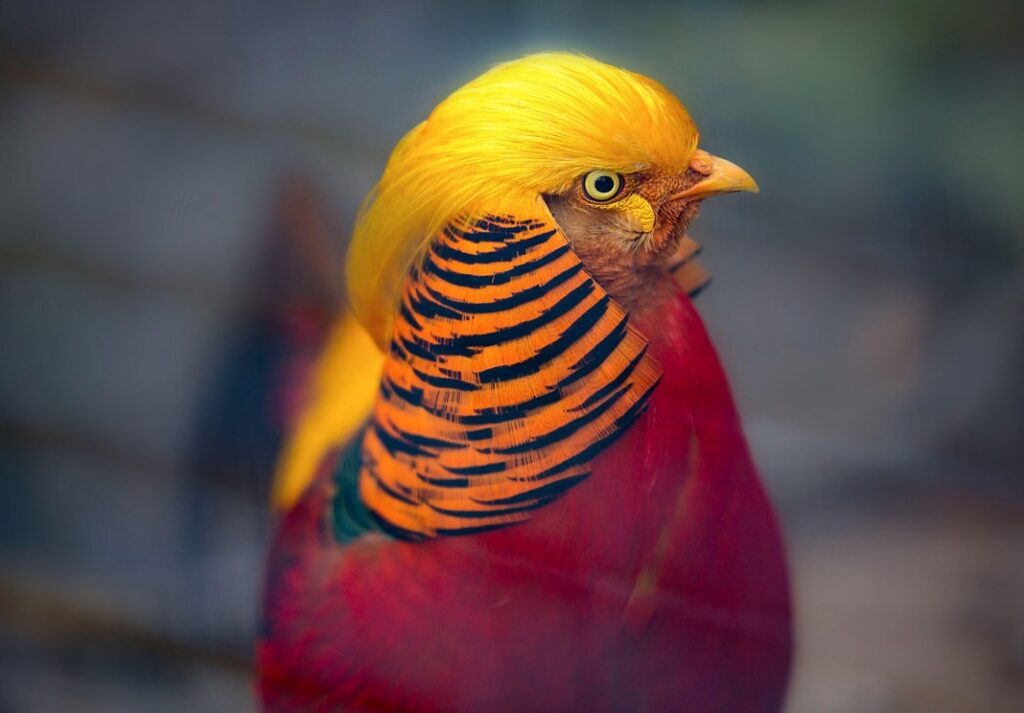
St Hugh’s Tutorial Fellow in Biology, Professor Steve Portugal, had a paper published in Biology Letters on 26 November 2025 entitled: ‘The visual impediment of cranial ornamentation in male Chrysolophus pheasants’, which reports on the unusually obstructive plumage which compromises the vision of two types of pheasants.
Like many male birds, golden and Lady Amherst’s pheasants (Chrysolophus pictus and C. amherstiae) go to great visual lengths to woo a female. Instead of the vibrant tails of peacocks or the bright orange crests of Andean cock-of-the-rocks, the pheasants sport feathers that create a “toupee” on their head and a “cape” that wraps around their necks. While their fantastic plumage assists in attracting females, Professor Portugal’s paper reports that the feathers on the heads of these male golden pheasants decreases their field of vision. It is the first evidence of a bird where sexes see the world differently.
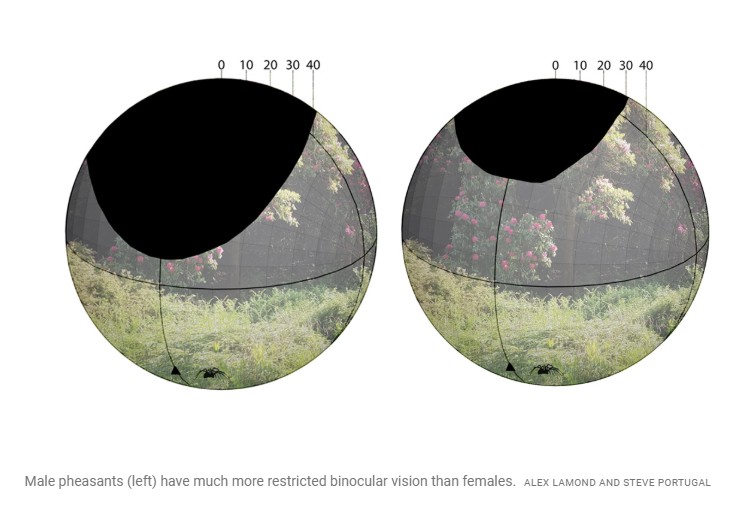
Professor Portugal said, ‘Looking this good comes with a cost. This amazing hairdo cuts out a large portion of their vision – love practically makes these birds go blind.’ When Professor Portugal and his team examined the pheasants’ eyes, they discovered that the toupee of “love feathers” of male golden and Lady Amherst’s pheasants compromised their binocular vision – especially their ability to look above them – by an average of 41% more than that of their female counterparts.
When the birds moult in September and October, their vision improves because of shedding of the cranial ornaments. In addition to being the first known case of sex-based vision difference in birds,
the research team said the find represents the first known case of a bird’s visual field changing as the year progresses.
The paper has been reported on in the New York Times and Science.
