20 October 2026
St Hugh’s Sports Fellow wins gold at Rotary Cycling World Championships
Congratulations to St Hugh’s Sports Fellow Professor Horst Eidenmüller
Read More
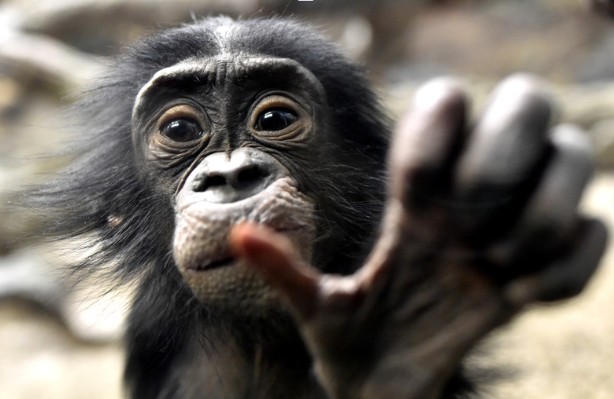
In a paper entitled ‘Bipedalism and brain expansion explain human handedness’ recently published in PLOS Biology, St Hugh’s Tutorial Fellow in Human Sciences, Professor Thomas Püschel investigates why humans are the only primates with a population-wide hand preference. The research suggests the answer comes down to two defining features of human evolution – walking on two legs, and the dramatic expansion of the human brain.
It is one of the strangest puzzles in human evolution. About 90% of people across every human culture favour their right hand – with no other primate species showing a population-level preference on this scale. Despite decades of research into the brains, genes and development behind handedness, why humans ended up so overwhelmingly right-handed has remained an evolutionary enigma.
The study, by Professor Thomas A. Püschel and Rachel M. Hurwitz at Oxford’s School of Anthropology and Museum Ethnography, with Professor Chris Venditti at the University of Reading, brought together data on 2,025 individuals across 41 species of monkeys and apes. Using Bayesian modelling that accounts for evolutionary relationships between species, the team tested the major existing hypotheses for why handedness evolved: including tool use, diet, habitat, body mass, social organisation, brain size and locomotion.
The findings point to a two-stage story. Walking upright came first, freeing the hands from the work of locomotion and creating new selective pressure for fine, lateralised manual behaviours. Larger brains came later, and as they grew and reorganised, the rightward bias hardened into the near-universal pattern seen today.
Professor Püschel said, ‘This is the first study to test several of the major hypotheses for human handedness in a single framework. Our results suggest it is probably tied to some of the key features that make us human, especially walking upright and the evolution of larger brains. By looking across many primate species, we can begin to understand which aspects of handedness are ancient and shared, and which are uniquely human.’
For more information please click here.
