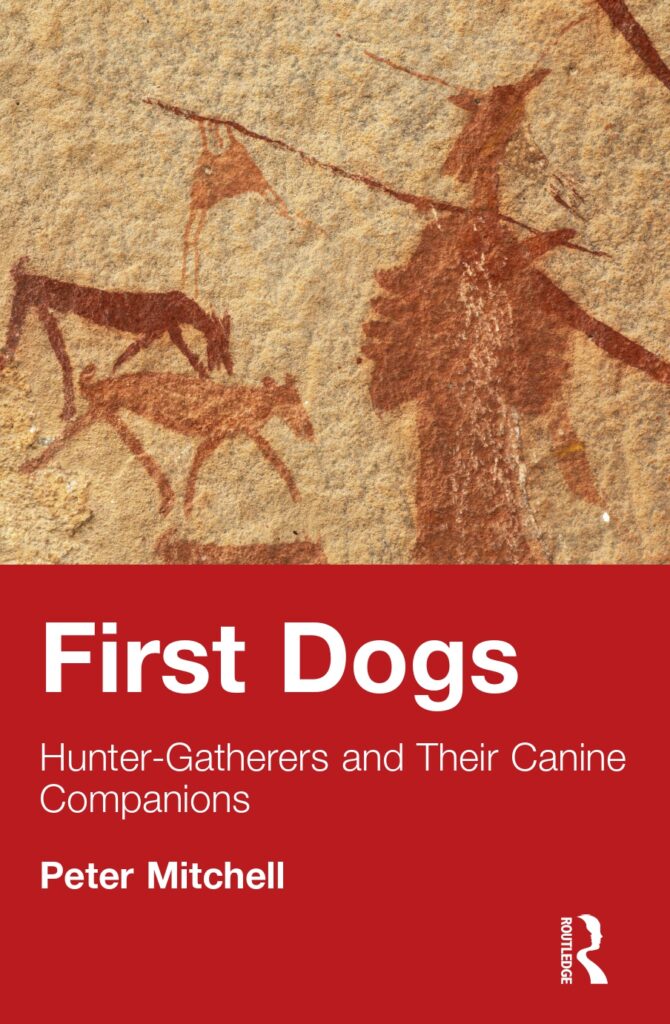
St Hugh’s Fellow publishes book which explores human relationships with dogs
St Hugh’s Tutorial Fellow in Archaeology & Vice Principal, Professor Peter Mitchell has published a new book called First Dogs in which he uses archaeological and anthropological evidence to explore our relationship with dogs from prehistory to the present day.
Dogs were the first domesticated animal and remain the geographically most widespread. Over 16,000 years old and counting, their association with people has spanned the globe. But while hunter-gatherer societies were, of necessity, involved in the process whereby grey wolves and humans first evolved a symbiotic relationship, the connections between them and dogs have been under-studied, at least at the global scale. First Dogs sets out to change that by using archaeological and anthropological case-studies from across the world (i.e. not just the Global North) to enquire not just into how wolves became dogs and how dogs then dispersed beyond Eurasia, but also into what happened to them thereafter.
Successive chapters consider dogs as hunting aids and transport technologies, as well as how hunter-gatherers fed, cared for, and thought about them in mythology, ritual, and art. The canine dimension of European colonialism post-1492 is another key topic in an interdisciplinary work that offers an up-to-date account of all aspects of the diverse relationships that have shaped the lives of hunter-gatherers and their canine companions and continue to do so.
The book is available to purchase from Routledge.